
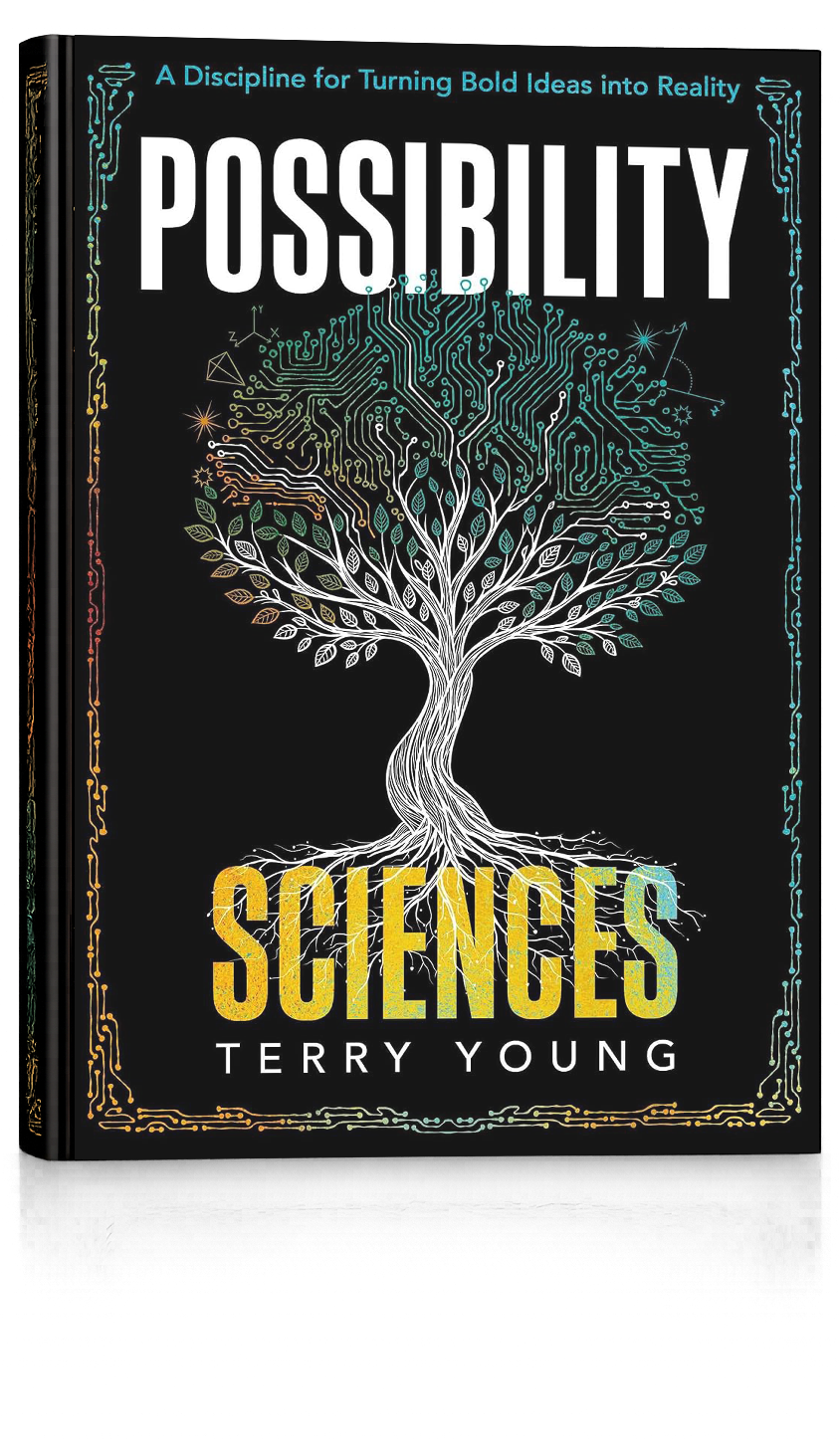
The greatest challenge of this century isn’t imagining a better future. It’s building the systems capable of bringing it to life.
- Terry Young,
Author Possibility Sciences

Pre-Order Your Copy Today








Welcome to Possibility Sciences.
In Possibility Sciences, Terry Young introduces a new discipline that explains why some bold ideas reshape the world while others stall—and how to create the conditions in which breakthroughs endure and compound.
Humanity has never possessed greater imaginative or technological capacity. Yet the institutions responsible for turning possibility into progress remain optimized for another era—rewarding short-term performance, incremental improvement, and operational efficiency over long-horizon transformation.
We are entering an era defined by the Possibility Gap: the widening distance between what humanity can imagine and what our systems are capable of realizing. Rather than asking what the future will be, Possibility Sciences asks a different question: How do breakthroughs actually emerge, spread, and redefine what’s possible?
Drawing on concepts such as Return on Future, Stickability, Stackability, Zero-Waste Innovation, the Possibility Commons, Community-as-Laboratory, and Horizontal Combinatorial Innovation, Young presents an integrated architecture for enabling breakthrough ideas to move from possibility to lasting societal impact.
Written for leaders, innovators, entrepreneurs, policymakers, strategists, institution builders, and anyone committed to shaping a better future, Possibility Sciences is more than a book about innovation. It is the foundational introduction to a new discipline designed to move beyond prediction and incrementalism toward intentionally building the futures we want to create.
10 things this book will help you do:

About Terry Young
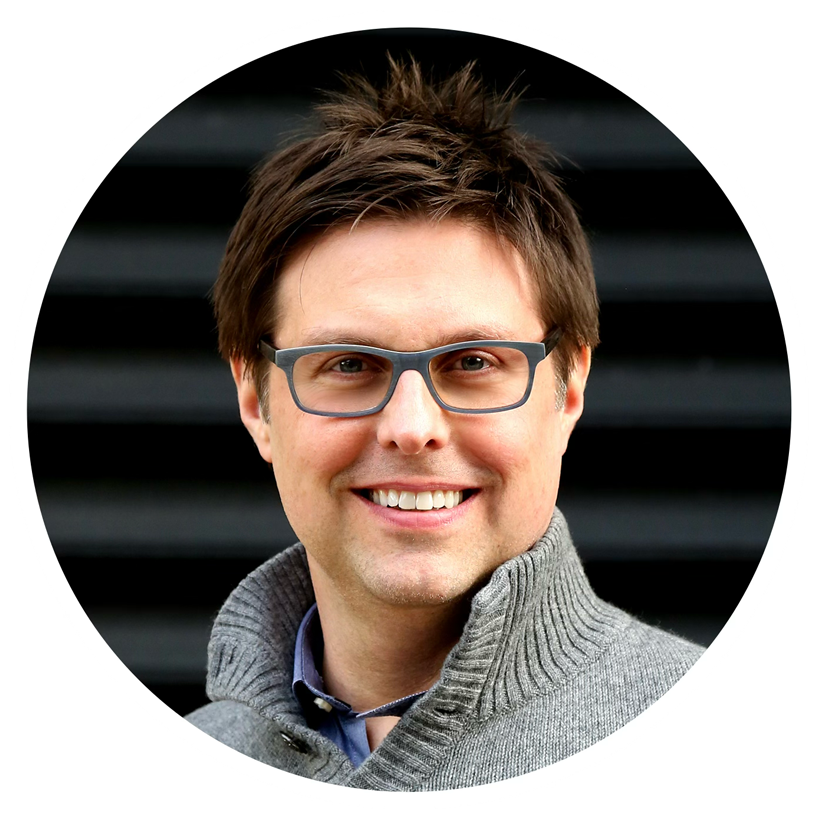
Terry Young is a founder, author, and field-builder who created Possibility Sciences, a new discipline for understanding why bold ideas reshape the world while others stall—and the conditions in which breakthrough ideas take root and compound. Drawing on systems thinking, social science, artificial intelligence, design thinking, network theory, exponential technologies, and public-interest technology, the discipline examines how societies expand our collective capacity to realize what once seemed impossible.
Young is the founder and former CEO of sparks & honey, the cultural intelligence consultancy that pioneered the cultural strategy industry and helped organizations anticipate emerging cultural shifts long before they became mainstream. Over twelve years of daily culture briefings, he developed new approaches for sensing weak signals, connecting ideas across disciplines, and translating cultural change into strategy, innovation, and long-term growth.
His career spans entrepreneurship, McKinsey & Company, and advising Fortune 500 companies, governments, nonprofits, and public institutions navigating disruption, reinvention, and long-horizon transformation. Across those settings, his work has remained focused on a single question: How do people and institutions become better at turning bold possibilities into reality?
A former Peace Corps volunteer in Uralsk, Kazakhstan, Young’s perspective has been shaped as much by lived experience as executive leadership. Those experiences working alongside local entrepreneurs, families, and community leaders continue to shape his thinking about how societies turn possibility into progress.
He is also the founder of the nonprofit Possibility Institute, established to advance Possibility Sciences through research, education, technology, and collaborative practice. Young lives in New York with his partner and two children.
Bulk orders
TBD
Who this book is for:
Leaders trying to move beyond incrementalism.
Founders building new categories.
Investors looking for long-horizon value.
Policymakers facing systems-level complexity.
Educators preparing people for a radically different future.
Strategists, designers, researchers, and technologists working across boundaries.
Citizens who can feel that inherited systems are no longer enough.
And anyone carrying a bold dream that has not yet found a path.